Solution 01 / Measure
Weigh in motion, without asking the driver to stop.
The lane stays open. The vehicle keeps its speed. Gross weight and individual axle loads are resolved as the wheels cross a sensor buried flush in the road.
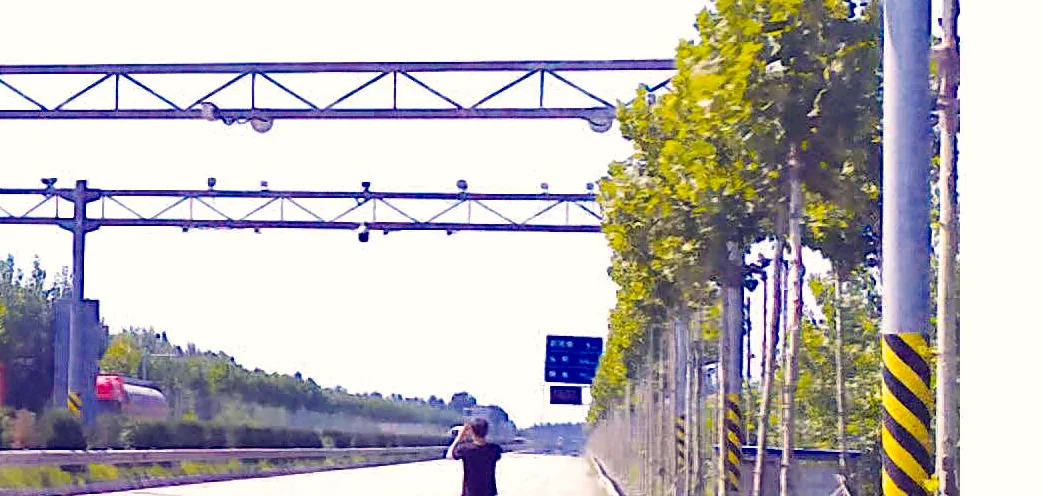
01 / The measurement
A wheel is not a point load. It is an event.
A static weighbridge waits for a vehicle to become still, then reads a settled force. A weigh-in-motion lane has no such luxury: the load arrives, grows, shifts between axles and leaves within a fraction of a second, while the suspension is still moving.
Our wide-flange plate sensor answers this with full-wheel load integration. Rather than trusting a single sample, it accumulates the load across the whole contact of each wheel with the plate. Irregular driving — weaving, hugging one edge, or crossing at an angle — stops being a source of bias, because the integration covers the entire passage rather than one line through it.
The acquisition unit then groups wheel figures into axles, axles into groups, and groups into a gross vehicle weight. Every step carries a timestamp, so the numbers belong to one specific pass.
02 / The operating envelope
Speed is a design input, not an exception.
The system is specified for vehicle speeds from 1 to 100 km/h. That range is deliberately broad: the same lane may see a crawling queue at a gate in the morning and free-flowing traffic in the afternoon.
What changes with speed
At low speed the contact event is long and the signal is generous. At highway speed the window is short and the dynamics of the vehicle dominate. Calibration and the integration window are set for the site, which is why we ask for the expected speed distribution before quoting.
Within the stated envelope, the method does not trade one figure against the other: a single pass yields both a gross weight and a per-axle profile.
What the buyer should ask any supplier
Ask whether the quoted accuracy is for gross weight or for a single axle, at which speeds it holds, what lane geometry it assumes, and whether the figure includes the acquisition and software. A number given without those conditions is not a specification — it is a headline.
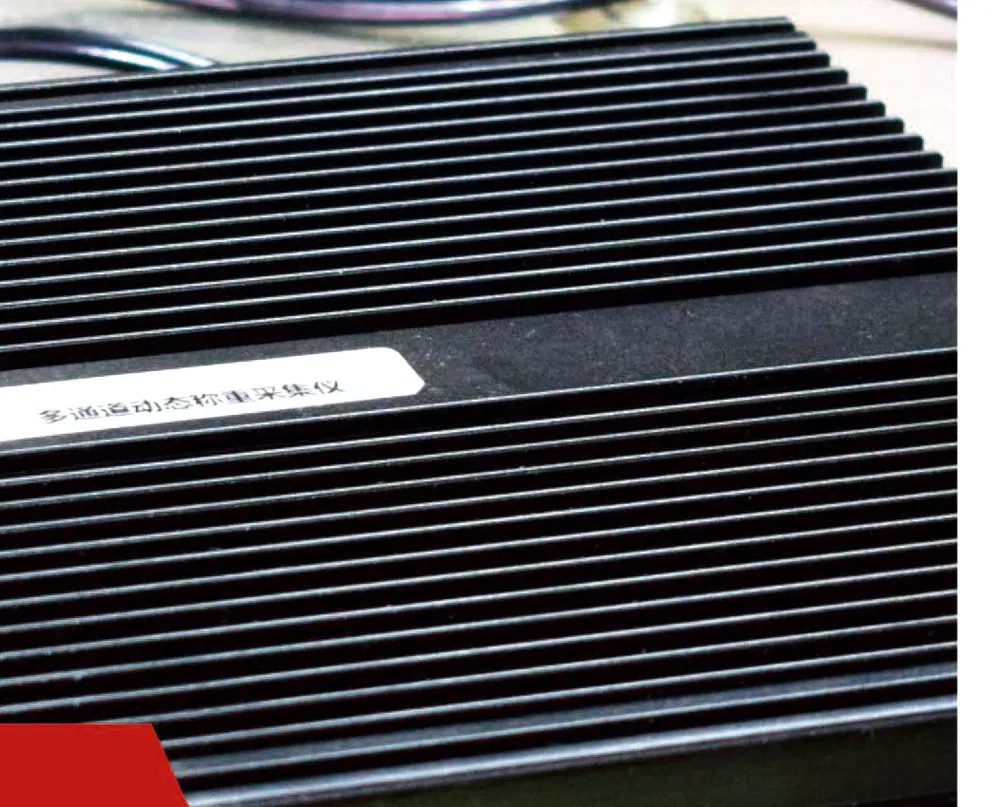
03 / From signal to record
The reading is only useful once it is kept.
Each pass is written locally with its axle profile, speed and timestamp. If the link to the outside world drops, the lane keeps working and the data waits in local cache rather than disappearing.
From there the same chain can be extended with ANPR capture for identity, an LED information board for an immediate driver decision, or the anti-cheating logic described in overload enforcement.