Weigh in motion / Jiajia WIM
Weigh every truck in motion.
A weighbridge asks a loaded truck to stop. A Jiajia WIM system measures it while it keeps moving — gross weight, axle groups and plate identity, captured in a single pass at traffic speed.
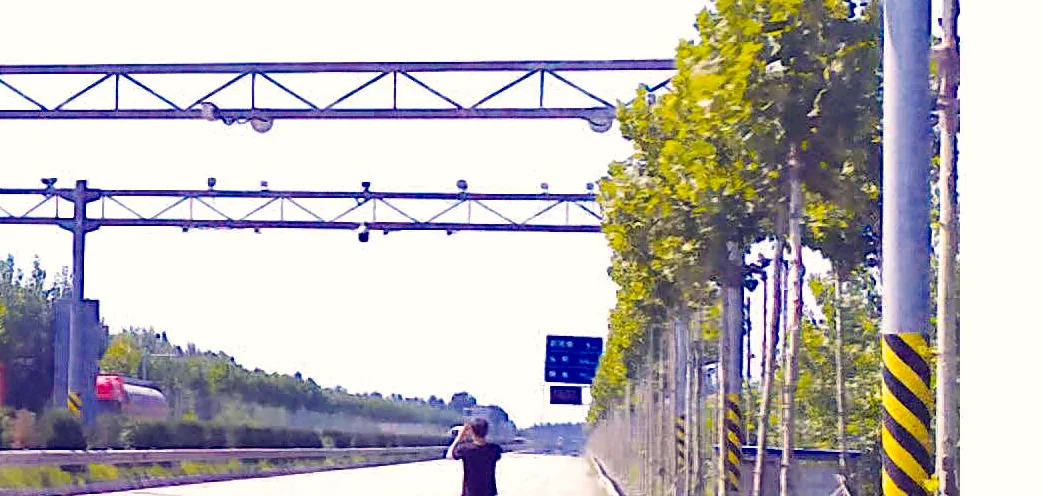
01 / The problem
Stopping a truck is the most expensive way to weigh it.
Every static weighbridge is a bottleneck with a roof over it. A vehicle leaves the traffic stream, waits its turn, creeps onto a platform, stops, settles, and is released. Multiply that by a few hundred arrivals a day and the queue becomes the real cost: idling engines, a lane of land that earns nothing, and staff whose whole job is to wave vehicles forward.
For a highway authority the queue is a safety exposure. For a port or a mine it is throughput left on the table. For an enforcement team it is a filter — the vehicles that most need checking are often the ones with the least incentive to pull over.
Dynamic weighing removes the stop. The measurement happens in the lane, at the speed the vehicle was already travelling, and the result is attached to the vehicle rather than to a moment of standing still.
02 / The principle
The road becomes the instrument.
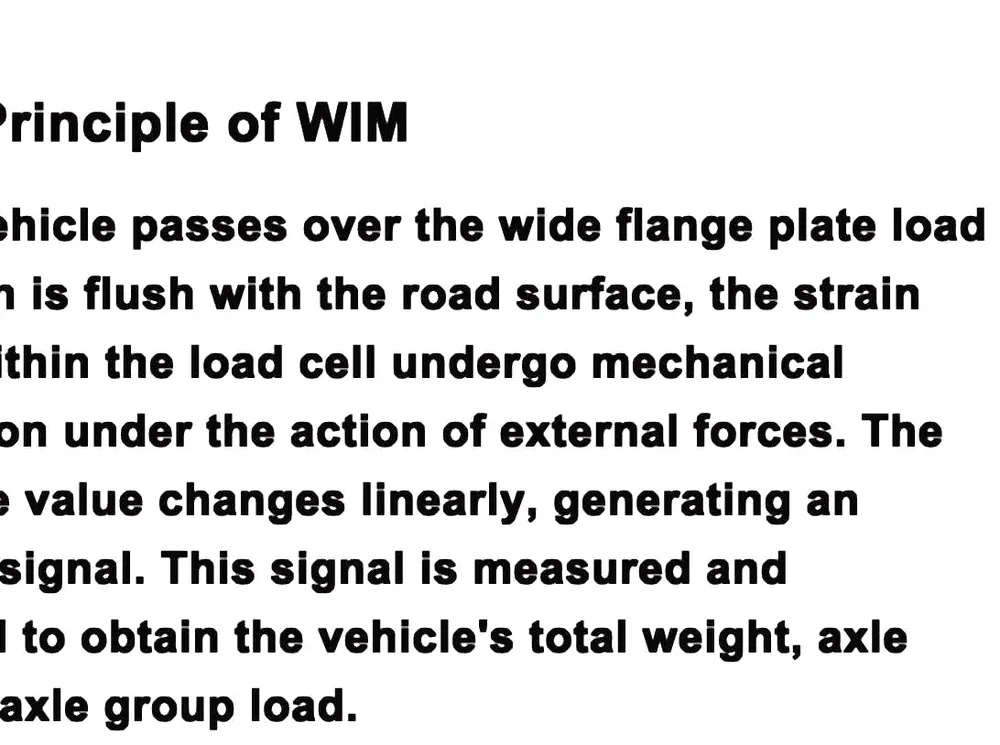
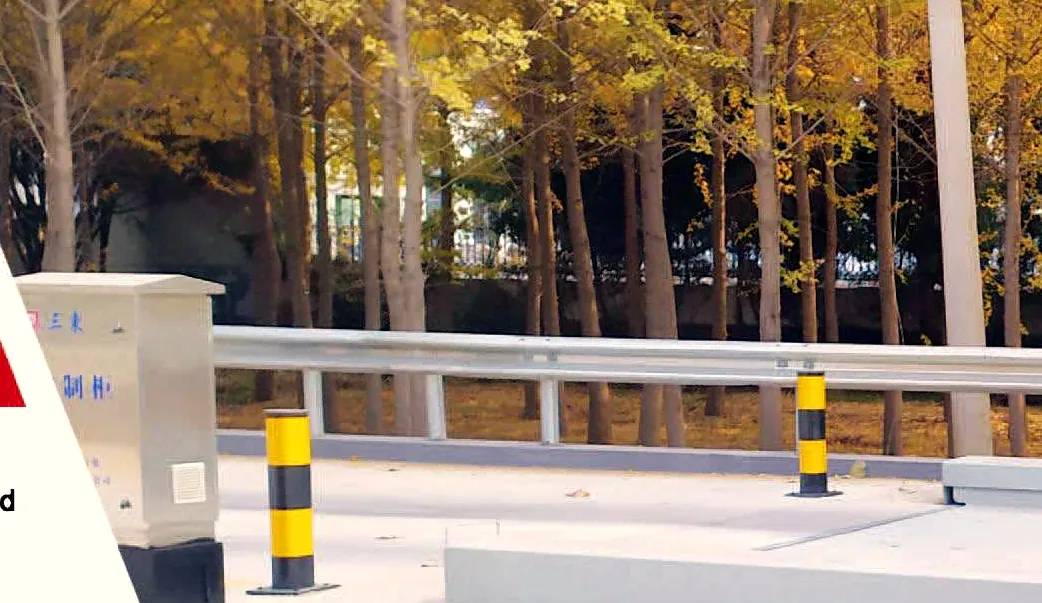
Instead of a platform the driver must find, a thin wide-flange plate sensor is buried flush in the carriageway. As each wheel rolls across it, the sensor integrates the whole wheel load rather than sampling a single instant.
Full-wheel load integration
A wheel crossing a plate does not present one clean force. Suspension movement, a slight weave, an off-centre line and the transfer of weight between axles all distort the signal. Full-wheel load integration gathers the load across the entire contact event and resolves it into a figure for that wheel, which removes the bias caused by eccentric or irregular driving.
Sum the wheels into axles, the axles into axle groups, and the groups into a gross vehicle weight. The arithmetic is simple; the engineering is in capturing a clean signal from a vehicle that never stops to be measured.
What the buyer actually specifies
Dynamic accuracy of ±0.5% on gross weight, with the product handbook expressing the result as Class 1 for total weight and Class E for single axles. That figure is a system figure — sensor, lane geometry, acquisition and software together — which is why we sell the measurement chain rather than a spare part.
Read the technical explainer on how dynamic weighing works →
Dynamic accuracy is a property of the whole lane. A good sensor in a badly specified system will still give you a bad number.Jiajia WIM design note
03 / The system
Four parts, one chain of evidence.
A weight on its own is easy to dispute. A weight tied to a plate, a timestamp, an image and an on-screen decision is not. These are the building blocks we configure per site.
Wide-flange plate sensor
58 mm thick, buried directly in the lane with no civil foundation pit. IP68, 150% overload tolerance, and the full-wheel integration that makes the rest of the chain possible.
Explore the sensor 02IdentityANPR capture
Automatic number plate recognition binds the axle-load record to a vehicle, with image capture and video linkage for a defensible evidence file.
Explore ANPR 03DecisionLED information board
A signal-yellow roadside display tells the driver, in the moment, whether the pass is within limit, over speed or over weight — without a stop.
See all componentsSix environments. One measurement discipline.
Scroll the deployments →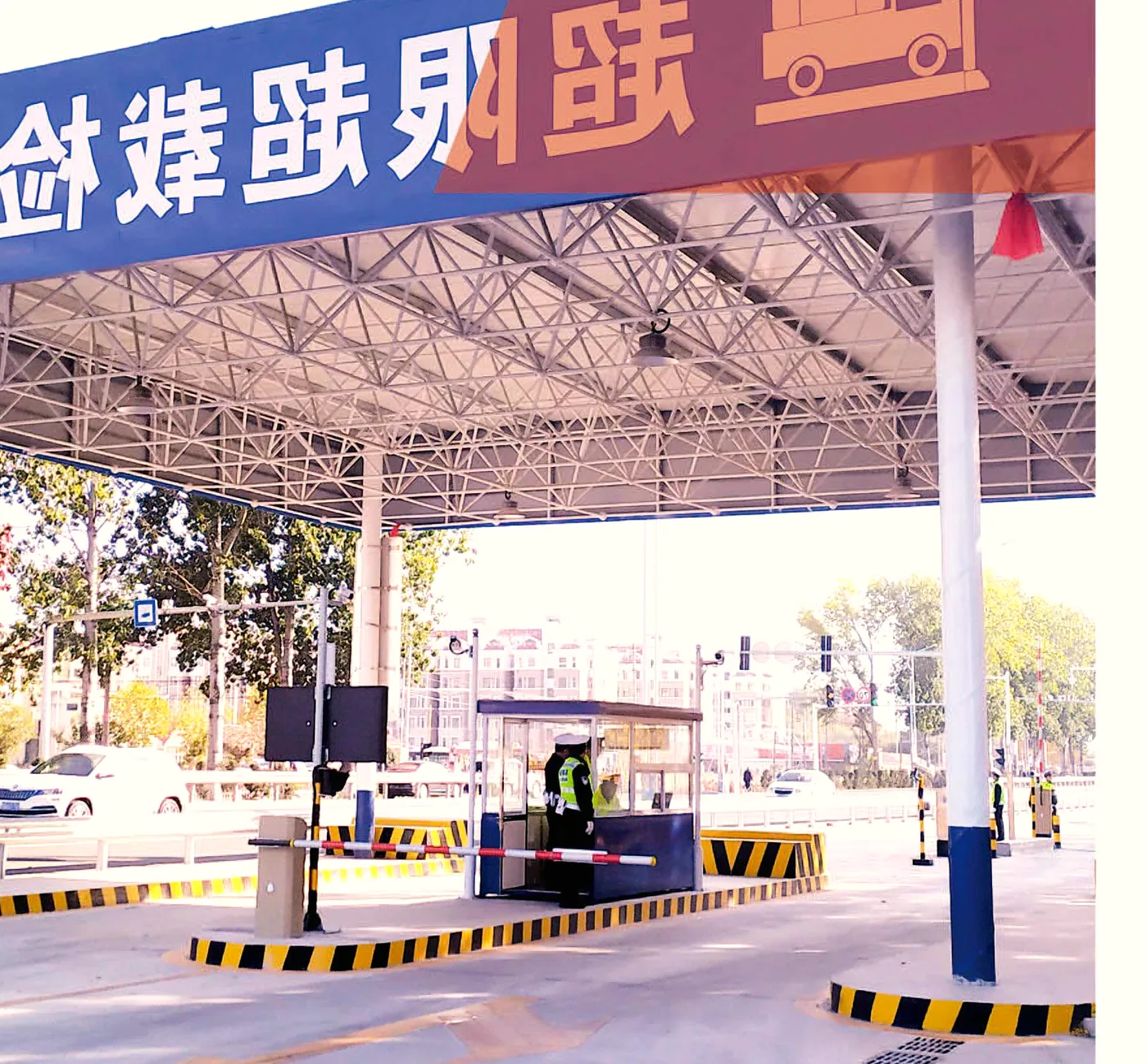
04 / Deployment
From a single lane to a managed network.
The same measurement chain scales from one unattended gate to a group of sites reporting into one place.
The software is part of the specification
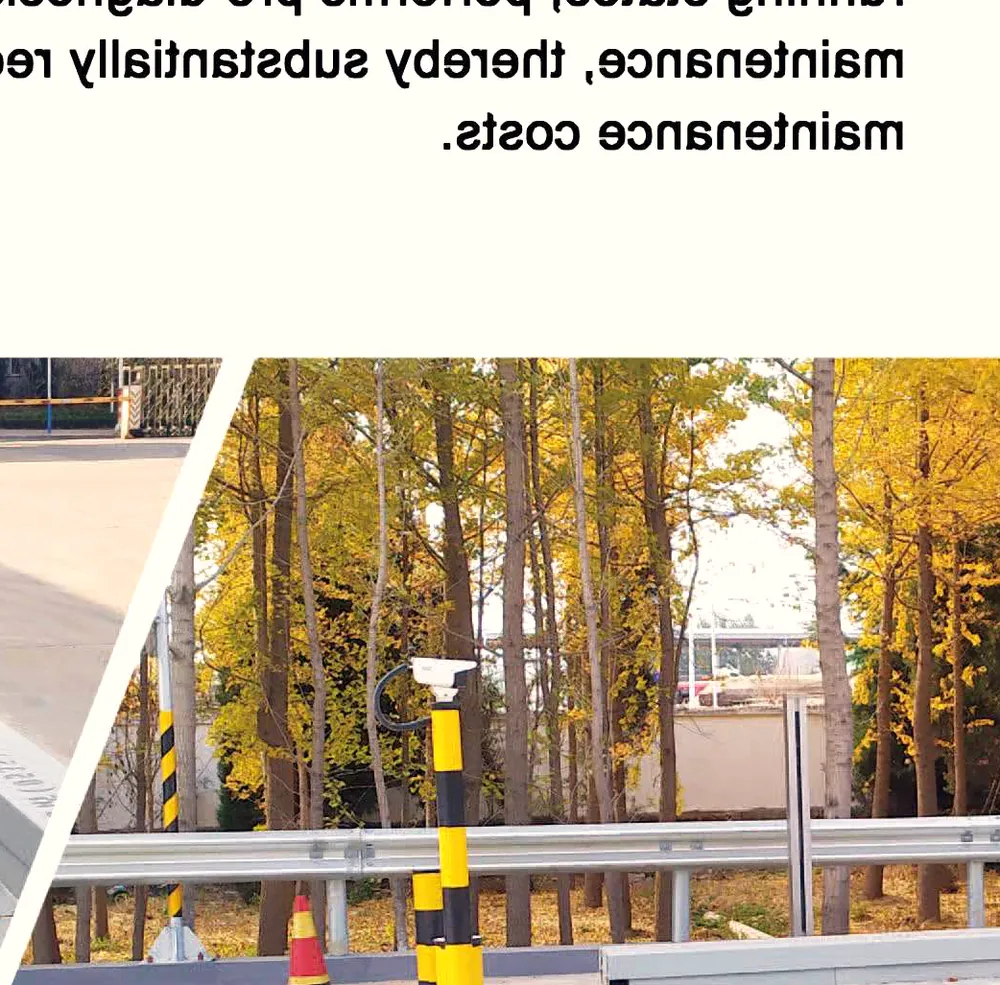
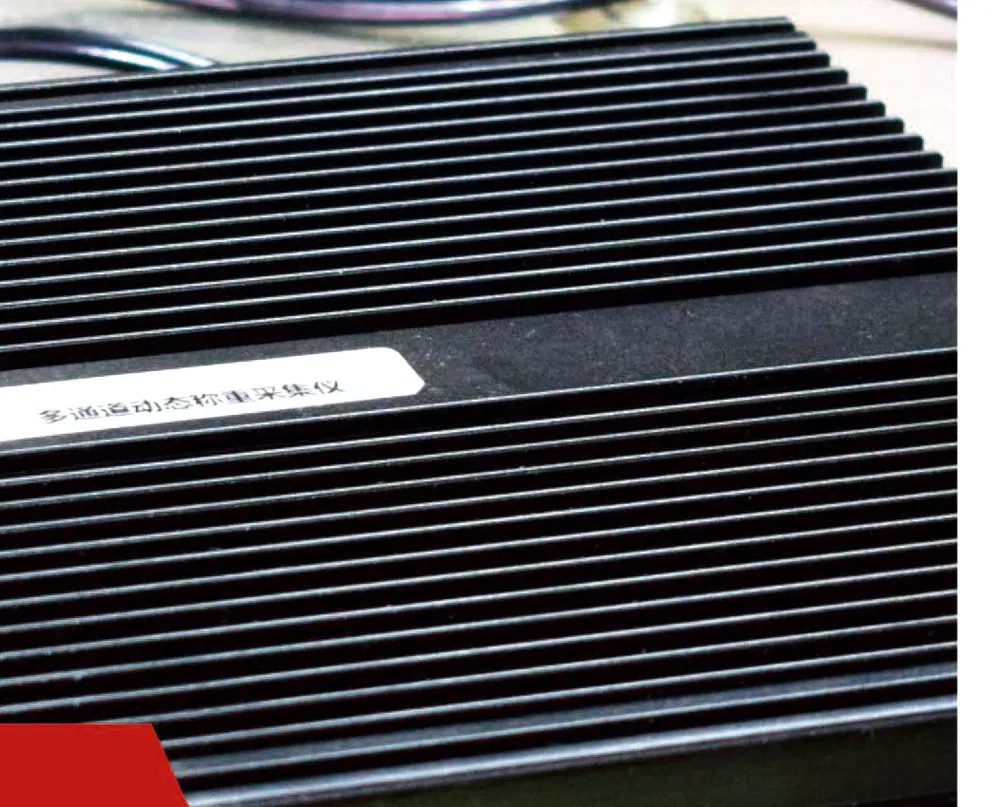
Image capture and video linkage, detection of S-shaped detours, rushing or dragging across the plate, local caching when the network drops, and central supervision of many sites — these are not optional extras bolted on later. They are what turn a sensor reading into an enforceable record.
Made and supported by one team
Research, manufacturing, installation and maintenance sit under one roof in Yantai, Shandong, China. A distributor is not left negotiating between a sensor vendor, a software house and a civil contractor.
05 / Enquiry
Start with the lane, not a part number.
Tell us the vehicle mix, the speed range, the limit you must enforce and how many sites you plan. We will come back with a configuration and commercial terms.