Blog / Buyer's Guide
The Data Workflow Behind a WIM Enforcement Station: From Sensor Pass to Defensible Record
Anyone can put a weight on a screen. An enforcement station has to produce a record that survives a challenge weeks later — from the right vehicle, at the right time, measured on a healthy lane. This is the pipeline that has to exist between the wheel crossing the plate and the file an officer, an auditor or a court can rely on.
01 / Systems
Ask for a "weigh-in-motion system price" and you will receive quotations that look comparable and are not. Some price a sensor; some price a measurement chain; some quietly exclude the software that makes an enforcement result usable. The difference is the data workflow — the sequence of steps that turns a wheel force measured in milliseconds into a record that can stand in front of a transporter, an auditor or a tribunal. In an enforcement deployment, the workflow is the product. The plate, the cameras and the signs are its physical carriers. This article walks the pipeline stage by stage and states, at each stage, what a buyer should insist on seeing in the specification — whichever supplier's name is on the drawing.
Why the workflow is the product
A screening lane that weighs but cannot prove is an expensive curiosity. The value of a weigh-in-motion installation is not the ±0.5% gross-weight figure on a datasheet; it is the fact that at 22:41 on a Tuesday, a specific truck with a readable plate crossed a healthy lane, produced a measured over-limit mass, was flagged within seconds, and every element of that sentence can be evidenced from stored data months later. That sentence is assembled by five stages: capture, identity, exception handling, storage and review. Weakness in any one of them collapses the whole claim — a correct weight attached to the wrong plate is a wrong record, and a perfect record that vanishes in a network outage never existed. Price the workflow, then price the hardware inside it.
Stage 1: the sensor pass
Everything begins with one wheel crossing a wide-flange plate in tens of milliseconds. The plate is 58 mm thick, buried flush in the carriageway without a civil foundation pit, sealed to IP68 and tolerant of 150% overload — but at this stage none of those adjectives matters as much as the measurement method. Full-wheel load integration gathers the load across the complete contact event of each wheel rather than sampling a peak, which is what allows a clean axle and gross figure to be recovered from a vehicle that is bouncing and shifting load. The acquisition unit sums wheels into axles, axles into groups and a gross weight, each stamped with the same clock. The specification question here: does the quoted system include the acquisition hardware with the sensor, and is the stated accuracy expressed the way the manual expresses it — Class 1 for total weight, Class E for single axles, across the 1–100 km/h envelope? A percentage without its speed and weight qualifiers is a headline, not a specification. The plate sensor page documents the measurement side.
Stage 2: binding the weight to an identity
A weight is meaningless in enforcement until it belongs to a vehicle. This is the job of the licence-plate recognition subsystem: capture the plate at the weigh point, synchronise the camera timestamp with the acquisition clock, and bind the two into one event record. The buyer-visible details are less glamorous than the marketing photos and far more important: capture reliability at the site's actual approach speed and lighting, how a misread plate is flagged rather than silently attached to the wrong record, and whether image and video are linked to the weight record at the moment of capture rather than stitched together later in someone's spreadsheet. See the ANPR component page for how identity capture is configured. If a quotation treats cameras as an optional brochure add-on and never mentions time synchronisation, the identity stage of the workflow has not been priced at all.
Stage 3: exceptions and anti-cheating logic
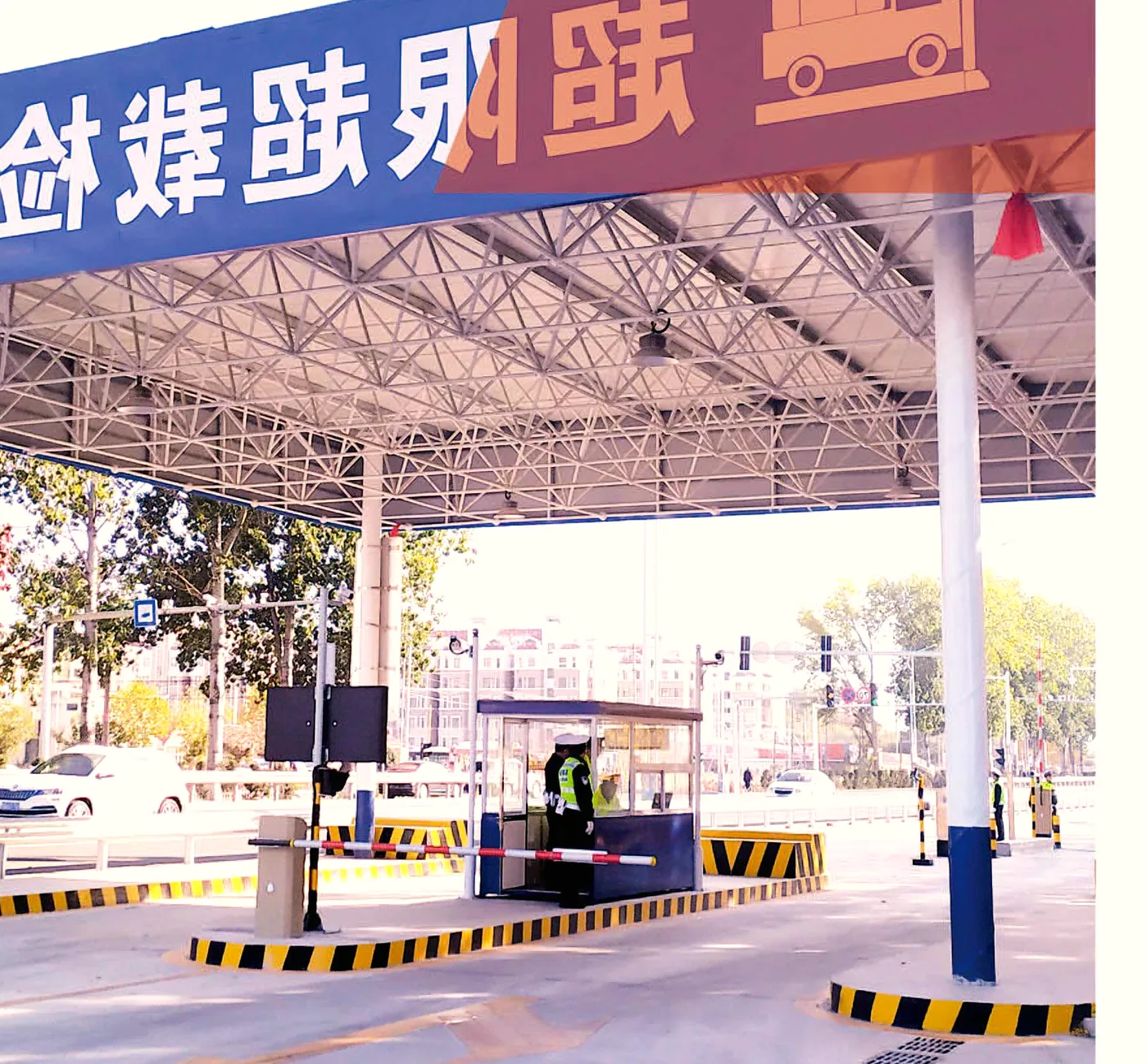
A moving vehicle can be driven badly on purpose, and the workflow must know the difference between a bad pass and a valid weigh. Drivers hug an edge to shave an axle off the plate, cross diagonally, brake before the sensor, accelerate across it, weave an S-shape to shed load, or drag a trailer axle through the plate. A static platform never faces this judgement; a dynamic lane faces it every shift. The software layer holds those abnormal passes apart from normal records — our anti-cheating logic recognises S-bend approaches, sudden acceleration and dragging behaviour, and the image and video linkage explains the exception to a human reviewer. What you specify is the policy: which behaviours are flagged, whether flagged vehicles are directed to a checking lane by the overload enforcement station layout, and what the LED information board shows the driver in the seconds after the pass. Review is not a software extra; it is the difference between a dataset and an enforcement stream.
Stage 4: storage that survives the real world
Enforcement records die in three places: the network, the shift change and the server room. The workflow has to assume every link fails sometimes. Our systems are built for 7×24 unattended operation with local caching at the lane — when the connection drops, records accumulate on the site unit and reconcile when the link returns, rather than evaporating. Storage needs retention that matches your legal process, an audit trail that shows a record was never edited after the fact, and export in a form the reviewing authority actually uses. Ask any supplier three flat questions: where does a record live between the pass and the headquarters database; what happens to the last hour of weighings if the fibre is cut; and who can delete a record. If the answers are vague, the storage stage is your risk, not theirs.
Stage 5: review, action and the multi-site view
The pipeline ends where the decision happens. An officer or clerk reviews the flagged event — weight, plate, image, speed, lane health — and takes the action your process defines: a warning at the roadside board, a directed return at a weighing lane, or a file for prosecution. For an operator running several lanes, the same review surface should cover all of them; our software brings multiple sites under one central view, so patrol and office resources follow the data instead of visiting each lane. This is also where the economics of the whole workflow quietly appear: an automated pipeline with human review only at exceptions is what makes continuous enforcement affordable, which is why the unattended configuration is specified so often. Specify the review workflow before the colour of the cabinet.
What "system price" should mean in a quotation
This is also where the phrase that opened this article — weigh-in-motion system price — deserves its honest translation. A system price that covers only steel-in-the-lane hardware is priced against a different product than one that carries acquisition, identity capture, exception logic, resilient storage and the review console. The second is larger in roubles, dollars or local currency; it is also the only one that delivers enforcement outcomes rather than measurements. When you request pricing, ask each supplier to quote the five stages explicitly, and reject any line item that simply says "software" without saying what it records, flags, caches and displays. The gap between two apparently similar system prices is usually missing workflow, not thinner steel.
Reading a quotation as a workflow
Take any weigh-in-motion proposal and lay its line items against the five stages. Sensor and acquisition: stage one. Cameras and synchronisation: stage two. Anti-cheating rules and signage actions: stage three. Local caching, retention, audit trail: stage four. Review interface and multi-site management: stage five. A complete proposal touches all five explicitly; an incomplete one lists hardware and hopes. That single reading habit will tell you more about the true system price than any spreadsheet of unit costs, and it works on every supplier's paper, including ours — we would rather you checked. Commercially the frame is ordinary: a minimum order of one lane so a pilot is possible, around 60 days from a confirmed configuration, T/T payment, EXW through DDP, from a manufacturer with in-house research, manufacturing, installation and maintenance in Yantai, Shandong, China, trusted in 70+ countries.
And the discipline that governs everything we write: no certification we cannot show, no customer named without consent, no invented accuracy class. The workflow above is the software we ship, described in the manual we quote when you ask.
Specify the pipeline, not just the plate.
Send the lane layout, the speed range and what your enforcement process must prove. Talk to a systems engineer and we will map the five stages to a configuration and a written quotation — or read the overload enforcement solution and the how dynamic weighing works guide first.